

Top 10 Dystopian Looks for Women
July 5, 2025
Top 10 Grunge Meets Dystopian Fashion Looks
July 5, 2025
Dystopian movie fashion has become a defining visual element in science fiction cinema. More than just costumes, these outfits reflect societal collapse, authoritarian control, and futuristic rebellion. From minimalist utilitarianism to post-apocalyptic grunge, dystopian movie fashion tells stories without words. As audiences have grown more visually aware, costume design in dystopian films has evolved into an art form that influences real-world trends and pop culture.
In this article, we explore 10 iconic dystopian looks from popular movies , each representing a unique vision of the future shaped by chaos, control, or survival. These cinematic styles not only enhance storytelling but also serve as commentary on current social issues, often predicting or reflecting contemporary anxieties through fashion.
1. Mad Max: Fury Road – Wasteland Warrior Aesthetic
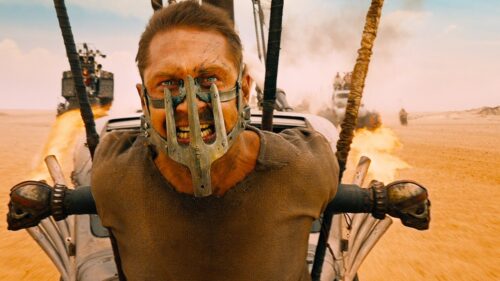
George Miller’s Mad Max: Fury Road redefined dystopian action cinema with its stunning visuals and bold character designs. The wasteland setting called for a rugged, resource-scarce aesthetic, resulting in one of the most recognizable examples of dystopian movie fashion.
Characters like Furiosa and Immortan Joe wear clothing made from scavenged materials—leather, metal, and repurposed fabrics. The use of face paint, prosthetics, and spiked accessories adds a primal edge to the look. This style emphasizes survival and tribal identity, with each faction having distinct visual cues. The “War Boys” wear minimal armor and body paint, symbolizing their devotion to war and death.
The film’s color palette—dominated by orange sands, blackened steel, and blood red—creates a stark contrast that enhances the chaotic beauty of the world. The dystopian movie fashion in Mad Max: Fury Road is both practical and symbolic, blending function with fierce individuality.
2. Blade Runner 2049 – Cyberpunk Chic
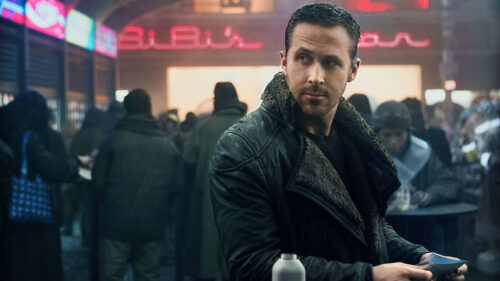
Denis Villeneuve’s Blade Runner 2049 continues the legacy of its predecessor with a hauntingly beautiful depiction of a near-future Los Angeles. The fashion in this film leans heavily into cyberpunk aesthetics—monochromatic tones, oversized coats, and layered silhouettes.
K’s wardrobe consists of muted grays and browns, emphasizing his role as a replicant enforcer caught between humanity and machinery. The use of transparent fabrics, reflective materials, and high-tech accessories highlights the blend of technology and human life in this dystopian society.
Fashion designer Renée April crafted a world where clothing serves as armor against environmental decay and emotional detachment. The minimalist yet futuristic approach to dystopian movie fashion in Blade Runner 2049 reflects a world dominated by surveillance, corporate power, and isolation.
This sleek, somber style has influenced modern menswear and tech-inspired fashion, proving how dystopian movie fashion can transcend the screen and shape real-world trends.
3. The Hunger Games – Oppression vs. Rebellion
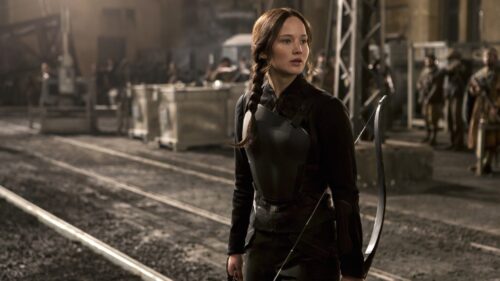
Suzanne Collins’ The Hunger Games series presents a clear divide between the opulent Capitol and the impoverished Districts, using fashion to highlight class struggle.
Katniss Everdeen’s early outfits are simple and functional—wool jackets, sturdy boots, and practical layers suited for hunting and survival. Her signature braid becomes a symbol of resistance and identity.
In contrast, the Capitol citizens wear exaggerated, avant-garde fashion—bold colors, synthetic textures, and grotesque accessories that reflect decadence and detachment from reality. Designer Cinna (played by Lenny Kravitz) dresses Katniss in the iconic “Girl on Fire” dress, which combines elegance with rebellion.
This juxtaposition showcases how dystopian movie fashion can be used to critique consumerism, media manipulation, and social inequality. Each outfit in The Hunger Games tells a story about power dynamics, making it a powerful example of visual storytelling through costume design.
4. Children of Men – Realistic Survival Gear
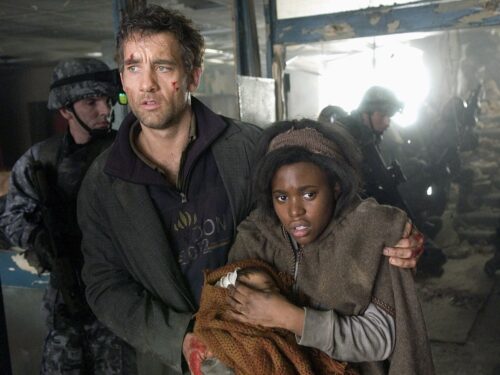
Alfonso Cuarón’s Children of Men offers a grounded take on dystopian movie fashion. Set in a near-future Britain plagued by infertility and societal breakdown, the film uses realistic clothing to depict a world in crisis.
The characters wear weathered jeans, hoodies, and military surplus gear, reflecting the mundane struggle for survival. There’s no glamour here—just worn-out clothes and makeshift protection. Even refugees are shown in tattered garments, emphasizing the dehumanization of displaced populations.
Clive Owen’s character, Theo Faron, wears a frayed coat and faded sweaters, embodying the exhausted everyman caught in a collapsing world. The lack of futuristic elements makes the dystopia feel disturbingly plausible.
This understated approach to dystopian movie fashion resonates because it mirrors our own world. It proves that sometimes the most impactful fashion isn’t flashy—it’s familiar.
5. Snowpiercer – Class Division Through Costume
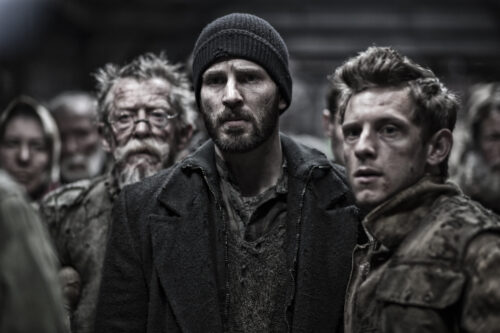
Bong Joon-ho’s Snowpiercer uses costume design to illustrate the extreme class divisions aboard a perpetually moving train. The passengers in the tail section wear patched-up, secondhand clothing, while those in the front flaunt extravagant, militarized uniforms.
Ed Harris’s character, Wilford, wears a sharp, authoritative suit, contrasting sharply with Chris Evans’s Curtis, who dons a bulky, insulated jacket covered in scars and repairs. The tail-section residents wear mismatched layers, gloves, and scarves—survivalist fashion at its finest.
Designer Catherine George emphasized texture and layering to show the passage of time and the harsh conditions endured by the lower-class passengers. The dystopian movie fashion in Snowpiercer becomes a literal representation of economic disparity, reinforcing the film’s central theme.
Each car represents a different era and style, from Victorian-inspired garb to futuristic sportswear, showcasing how dystopian movie fashion can evolve within a single narrative.
6. A Clockwork Orange – Provocative Futuristic Kitsch
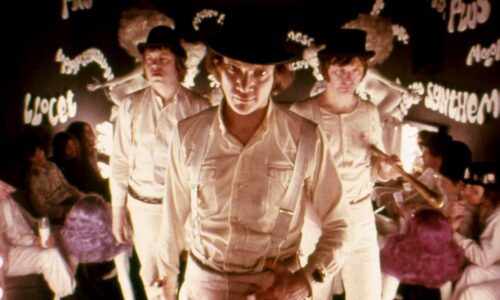
Stanley Kubrick’s A Clockwork Orange remains a cult classic, partly due to its bizarre and provocative fashion choices. Alex DeLarge and his droogs wear all-white outfits adorned with bowler hats, cane accessories, and codpieces—a mix of retro and surreal futurism.
Designed by Milena Canonero, the costumes are intentionally absurd, reflecting the film’s themes of violence, control, and psychological manipulation. The white suits symbolize youth rebellion and the artificial innocence imposed by the state.
The dystopian movie fashion in A Clockwork Orange challenges traditional notions of masculinity and morality. Its influence can still be seen in punk and avant-garde fashion today, proving that even decades later, dystopian fashion continues to inspire.
7. Waterworld – Post-Apocalyptic Practicality
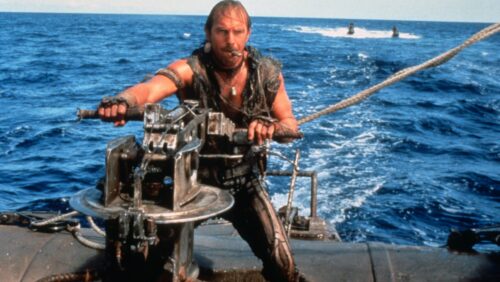
Kevin Costner’s Waterworld may not have been a critical darling, but its fashion choices stand out in the realm of dystopian movie fashion. In a world submerged under water, clothing had to adapt to aquatic living.
Costner’s character, known simply as Mariner, wears a long, oilskin duster, goggles, and a necklace made of seashells and debris. His webbed gloves and tattoo-covered skin give him a mythic, almost alien appearance.
The overall look is practical—water-resistant materials, layered insulation, and protective gear. Accessories like flippers and breathing tubes emphasize the need for adaptation in a drowned world.
Though Waterworld was criticized for its premise, its dystopian movie fashion deserves recognition for its creativity and functionality in a uniquely hostile environment.
8. Equilibrium – Minimalist Authoritarian Uniforms
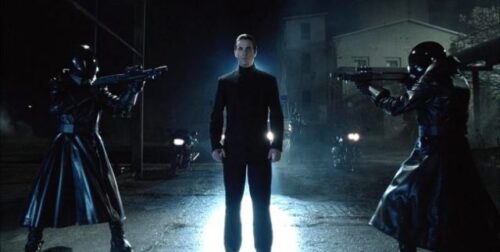
In Equilibrium , set in a totalitarian society that suppresses emotions, fashion plays a key role in enforcing conformity. Citizens wear identical gray trench coats, tailored suits, and emotionless expressions.
The uniformity reflects the government’s control over personal identity and emotional freedom. Christian Bale’s character, Preston, starts in full compliance before shedding his coat in a symbolic act of rebellion.
Designed to evoke coldness and detachment, the dystopian movie fashion in Equilibrium reinforces the sterile, oppressive regime. The use of symmetry, clean lines, and muted colors creates a chilling visual effect.
This style contrasts with more chaotic dystopian wardrobes, showing how simplicity can be just as intimidating when used to enforce order.
9. The Matrix – Cyber-Goth Noir
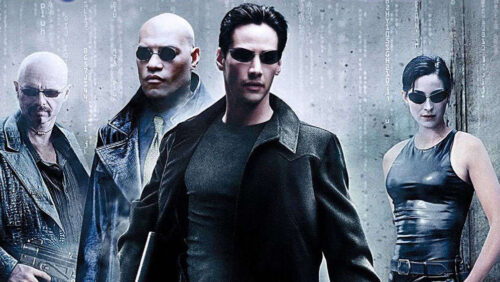
Few films have impacted dystopian movie fashion as much as The Matrix . The Wachowskis created a sleek, monochromatic world filled with trench coats, leather, and sunglasses—even indoors.
Neo, Trinity, and Morpheus wear all-black ensembles that combine martial arts practicality with gothic flair. The use of heavy coats, fingerless gloves, and high-tech accessories became instantly iconic.
Designed by Kym Barrett, the costumes were meant to represent the characters’ dual existence—both trapped in a digital illusion and fighting for freedom in the real world. The fusion of Eastern and Western aesthetics gave the film a timeless quality.
The Matrix proved that dystopian movie fashion could be stylish, philosophical, and deeply influential, inspiring fashion trends and sci-fi costume design for years to come.
10. Logan’s Run – Utopian Illusion
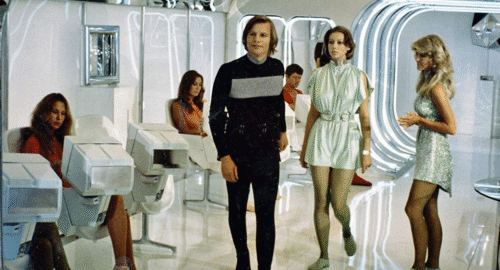
Set in a seemingly perfect but secretly oppressive society, Logan’s Run features some of the most colorful and stylized dystopian movie fashion of the 1970s.
Residents wear brightly colored jumpsuits that change based on age and status, with crystals embedded in their chests indicating their life expectancy. The costumes are futuristic yet elegant, combining metallic fabrics, geometric patterns, and minimalist design.
This fashion choice underscores the illusion of utopia—everything appears vibrant and advanced, but beneath the surface lies control and deception.
While dated by today’s standards, Logan’s Run showcased how dystopian movie fashion could be used to manipulate perception and maintain societal order.
Conclusion: The Lasting Impact of Dystopian Movie Fashion
Dystopian movie fashion goes beyond aesthetics; it shapes narratives, conveys themes, and influences culture. Whether through the gritty realism of Children of Men , the rebellious energy of Mad Max: Fury Road , or the sleek minimalism of Blade Runner 2049 , these looks leave lasting impressions.
As filmmakers continue to imagine possible futures, costume designers will play a crucial role in visualizing those worlds. Dystopian movie fashion remains a powerful tool for storytelling—one that speaks volumes without uttering a word.
Frequently Asked Questions (FAQs)
Q: What defines dystopian movie fashion?
A: Dystopian movie fashion typically includes clothing that reflects societal breakdown, authoritarian control, or post-apocalyptic survival. It often blends practicality with symbolism, highlighting themes like oppression, rebellion, or technological dominance.
Q: Why is dystopian fashion important in movies?
A: Dystopian fashion helps establish the tone and world-building of a film. It visually communicates the societal structure, character roles, and thematic elements, enhancing the audience’s immersion.
Q: Which movie has the most influential dystopian fashion?
A: The Matrix is widely regarded as one of the most influential in terms of dystopian movie fashion due to its iconic use of trench coats, sunglasses, and minimalist styling.
Q: Can dystopian fashion influence real-world trends?
A: Yes, many dystopian movie fashion trends have inspired real-world styles, particularly in streetwear, cyberpunk fashion, and avant-garde design.
Q: How do costume designers create dystopian looks?
A: Designers often combine recycled materials, futuristic fabrics, and symbolic motifs to create looks that reflect the film’s setting and themes. They focus on both function and visual storytelling.
Q: Are there any upcoming movies expected to showcase notable dystopian fashion?
A: With new dystopian films being released regularly, such as adaptations of Dune and sequels in franchises like Mad Max , fans can expect fresh takes on dystopian movie fashion in the coming years.
Final Thoughts
From cyberpunk chic to post-apocalyptic pragmatism, dystopian movie fashion continues to captivate audiences and inspire designers. These ten looks represent just a fraction of the rich visual language that costume design brings to dystopian cinema. As technology and storytelling evolve, so too will the fashion that defines our imagined futures.